

A first look at overnight cruises in Ha Long Bay
Content []
1. How an overnight Ha Long Bay Cruise actually works
Most overnight cruises follow a 2-day, 1-night schedule. The journey usually starts in Hanoi, with a morning transfer to the cruise port and boarding around midday. After check-in, guests have lunch while the boat begins sailing into the bay.
The first afternoon normally combines one main excursion with time onboard. Depending on the cruise route, this could mean kayaking, visiting a cave, swimming, or taking a local rowing boat through a quieter area. You then return to the vessel for sunset, dinner, and overnight accommodation.
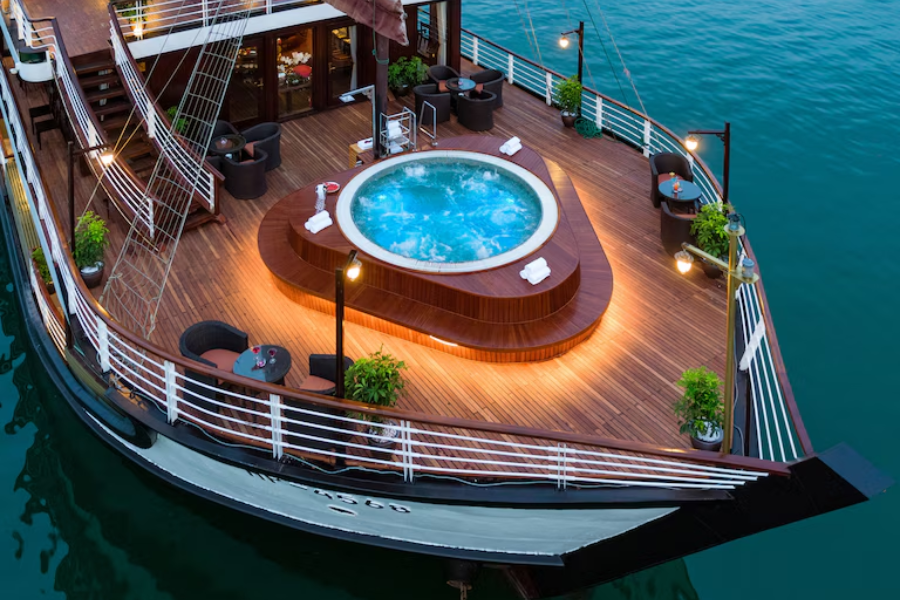
The second morning starts early. Some cruises offer Tai Chi on the sundeck before breakfast, followed by another short excursion or sightseeing activity. Brunch is usually served while the boat returns towards the port, with disembarkation around late morning or midday.
This structure is important when planning your trip. A 2-day, 1-night cruise is not two full days on the water. The first morning is largely spent traveling from Hanoi to the port, while the second afternoon is normally used for the return journey. You have roughly one afternoon, one evening, and one morning for the cruise experience itself.
That makes the choice of itinerary more important than the number of activities listed on the booking page. A cruise with three or four excursions is not necessarily better than one with a simpler schedule. If every activity involves getting on and off the boat, the experience can become surprisingly busy.
2. Where do Ha Long Bay cruises depart from?
Cruises may use different ports and marinas depending on their route and operator. Tuan Chau International Marina and Ha Long International Cruise Port are among the main departure points, while some itineraries use ports associated with Lan Ha Bay.
Always check the exact departure point before booking your transfer from Hanoi. “Ha Long Bay cruise” does not automatically mean that every cruise leaves from the same marina.
3. Ha Long Bay, Lan Ha Bay or Bai Tu Long Bay?
The wider limestone seascape includes several areas that are commonly marketed together with Ha Long Bay.Ha Long Bay is the most famous and has the highest concentration of established cruise itineraries and attractions.
Lan Ha Bay, located to the south of Ha Long Bay, offers similar limestone scenery and is often combined with Cat Ba Island. Some travelers choose this area because they prefer an itinerary with a stronger focus on quieter water and outdoor activities.
.webp)
Bai Tu Long Bay, to the northeast, is another alternative for travelers looking for a less concentrated cruise route.The scenery is related across these areas, but the actual experience depends on the cruise route, the excursion sites, and the number of boats operating in the same area on a given day.
4. Choosing a cruise that fits your travel style
Cruise prices can vary considerably, but the most expensive option is not automatically the best choice. Start with the elements that will actually affect your stay onboard.
Look at the route before the cabin
A beautiful cabin will not compensate for an itinerary that does not suit you. Check where the cruise travels and what excursions are included.
If you want to kayak and explore the water, look for an itinerary that gives sufficient time for kayaking rather than simply listing it as an optional activity. If caves and natural attractions are your priority, check the exact cave or excursion included. “Cave visit” is too broad to tell you what the experience will actually be.
Travelers looking for a quieter trip may prefer a cruise operating in Bai Tu Long Bay or Lan Ha Bay, although the atmosphere varies between individual itineraries.
Cabin choice matters more than you might expect
Most overnight cruises offer private cabins with an en-suite bathroom, air conditioning, and a window. Higher categories may include a private balcony, larger living space, bathtub, or better views.
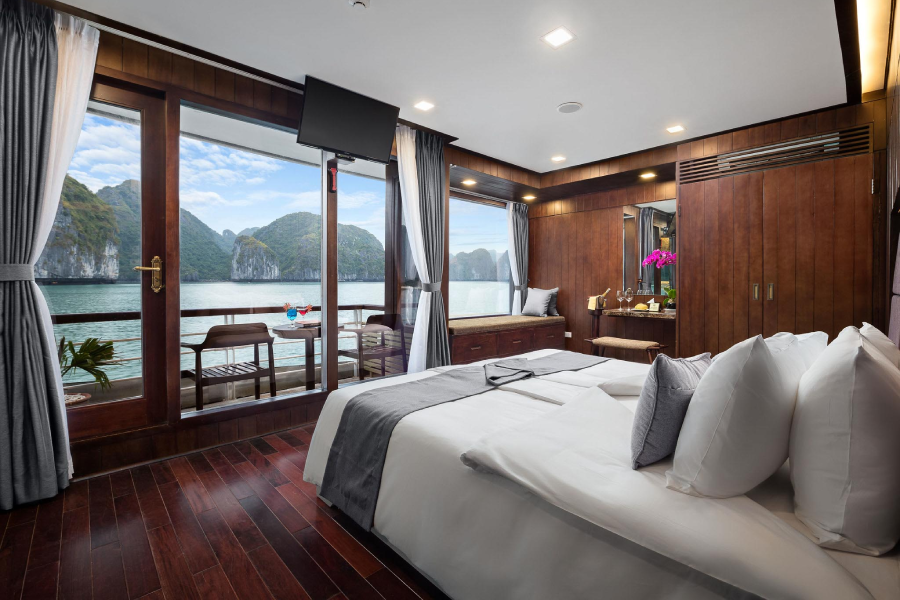
For a one-night cruise, a standard cabin is usually sufficient if you expect to spend most of your time on the sundeck and joining excursions. A balcony becomes more worthwhile if you enjoy having a private place to sit during sailing periods. If you are sensitive to movement, ask for a cabin closer to the centre of the vessel and on a lower deck. Cabins at the front or rear can feel more movement depending on sea conditions.
Families should also check the actual bed configuration rather than assuming that a room advertised for three or four guests will provide separate beds for everyone.
Check what the price includes
Cruise prices can look similar while covering different services. Before comparing options, check:
Round-trip Hanoi–cruise port transfer
Accommodation and cabin category
Meals onboard
Entrance fees
Kayaking or rowing boat activities
Cave or island excursions
Drinking water
Cooking demonstration or other onboard activities
Service charges and taxes
Some operators sell the cruise and Hanoi transfer separately. Others offer a package that includes shared transportation. If you are traveling independently, comparing the total trip cost is more useful than comparing the advertised cruise rate alone.
5. What you will do during the cruise
The exact itinerary changes between operators, but most 2-day, 1-night cruises combine sightseeing, water activities, meals, and free time onboard.
Kayaking and local rowing boats
Kayaking is one of the more active ways to experience the limestone landscape. You can move closer to cliffs, explore small waterways, and see parts of the bay that are difficult to appreciate from the main cruise deck.If kayaking is not suitable for you, some itineraries offer a local rowing boat instead. This option requires less physical effort and can be preferable for older travelers or families with young children.
Check whether kayaking is included in your package or charged separately.
Cave visits
Caves are common stops on Ha Long Bay itineraries. Visits usually involve walking through a developed cave system, often with stairs and uneven surfaces.
The experience is not particularly strenuous for most travelers, but comfortable shoes are useful. If you have limited mobility, check the specific excursion before booking because some caves require considerable walking and climbing.
Swimming and beach stops
Some cruises include a swimming stop, particularly during warmer months. This depends heavily on the route, season, sea conditions, and cruise schedule.Do not assume that every overnight cruise includes swimming simply because the booking page shows beach photographs. Check the itinerary for the actual activity.
Time on the boat
This is the part of the cruise that is easiest to overlook when comparing itineraries.
There will be periods when the boat is simply sailing. Use them to have a drink, sit on the sundeck, read, photograph the landscape, or rest in your cabin.The sundeck is generally the best place for panoramic views, while a private balcony offers a quieter alternative. Early morning and late afternoon are particularly good times to spend outside because the light and temperature are often more comfortable.
Meals and onboard dining
Meals are normally included in overnight cruise packages, although the format varies. Depending on the vessel, meals may be served as set menus, buffets, or a combination of both.Vietnamese seafood and regional dishes are common, alongside international choices. Travelers with food allergies or specific dietary requirements should inform the cruise operator when booking rather than waiting until boarding.
Some cruises also offer a Vietnamese cooking demonstration, usually as a short onboard activity rather than a full cooking class.
6. What to pack and how to prepare
You do not need to pack separately for a cruise, but a few items are particularly useful.Comfortable clothing is the most practical choice. You will move between the cabin, restaurant, sundeck, and excursions several times during the trip. Bring swimwear if your itinerary includes swimming, along with a light layer for the early morning or cooler months.
Comfortable shoes are important if your itinerary includes caves or island excursions. Flip-flops can be useful onboard but are less suitable for walking on uneven surfaces.
Bring sun protection, including sunscreen, sunglasses, and a hat. The reflection from the water can make the sun feel stronger than expected.A small waterproof bag is useful for kayaking or rowing activities. Keep your phone, camera, passport, medication, and other valuables in a secure dry bag when you are close to the water.
If you are concerned about seasickness, take precautions before boarding. Choose a cabin closer to the middle of the vessel, avoid heavy meals immediately before sailing, and bring any motion-sickness medication you normally use.Your passport is generally required for cruise check-in, so keep it accessible rather than placing it in checked luggage.
7. When is the best time for an overnight cruise?
Ha Long Bay can be visited throughout the year, but weather conditions vary significantly by season. The cooler months can bring misty and overcast conditions, while warmer months offer better opportunities for swimming but can also bring rain and tropical storms.
Cruise routes and activities may change because of weather. In poor conditions, authorities can restrict or suspend cruise operations for safety reasons. This is one reason to avoid building an itinerary where your international flight or another non-refundable activity immediately follows the cruise without any buffer.For the most comfortable experience, check the forecast shortly before departure and keep your plans flexible.
Is one night enough?
For most first-time visitors, 2 days and 1 night is a good introduction to the bay. It gives you enough time to experience the landscape after the day-trip crowds have thinned out, spend an evening onboard, and join several activities.
A 2-night cruise makes more sense if you want a slower schedule or a wider range of activities. The extra night can allow more time for kayaking, swimming, visiting additional areas, or simply staying onboard without feeling that every available hour needs to be filled.
For travelers with limited time in Northern Vietnam, however, one night usually offers a good balance between the cruise experience and the rest of the itinerary.
The most important thing is to choose the cruise according to how you want to spend your time, rather than choosing purely by vessel size, cabin photos, or price. Check the route, departure port, inclusions, excursion schedule, cabin location, and transfer arrangements before booking.
A well-chosen overnight cruise gives you something a day trip cannot: time to wake up surrounded by limestone islands, watch the scenery change throughout the day, and experience Ha Long Bay as part of the journey rather than simply as a short stop on the way back to Hanoi.
Read this next